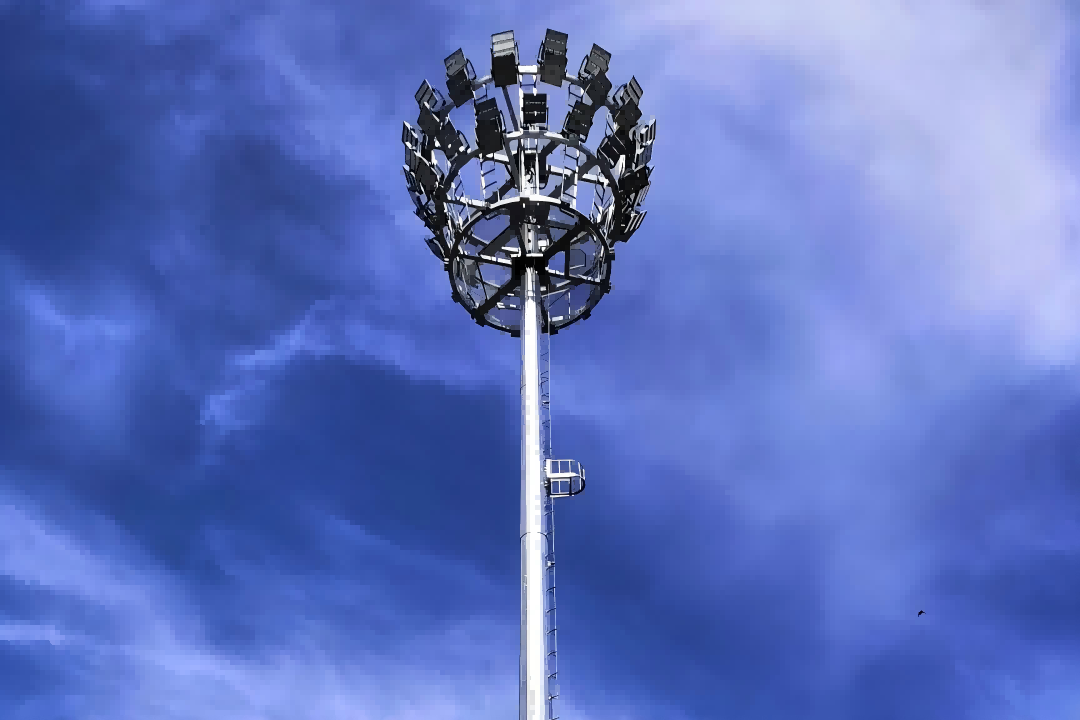
High mast lighting systems are critical infrastructure for illuminating large-scale areas like ports, airports, and transport hubs. However, because these structures are continuously exposed to harsh environmental dynamics, facility managers frequently encounter significant operational and structural challenges. Investing in structural assets that adhere to rigorous engineering compliance—such as heavy-duty steel poles engineered by MORELUXPOLE—is a foundational step in mitigating these long-term operational liabilities.
Key Takeaways
- High mast lights are hard to reach. This makes fixing them risky. Workers should use cranes and follow safety rules to stay safe.
- Checking high mast lights often can stop problems. This helps avoid long breaks and expensive fixes. Look for rust, cracks, and other problems every 6 to 12 months.
- Specifying high-tensile steel poles with verified structural coatings significantly extends the lifecycle of the infrastructure, minimizing emergency remediation costs.
High Mast Lights: Maintenance & Challenges
Dangerous Access
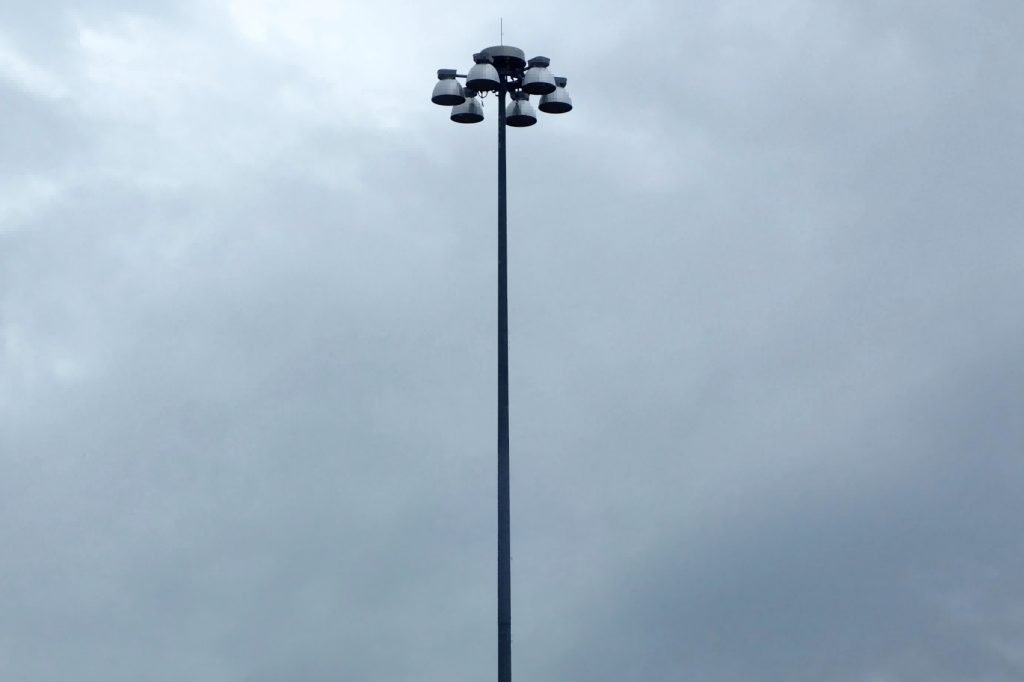
The extreme physical elevation of high mast luminaires—often ranging from 20 to over 50 meters—presents a primary maintenance bottleneck. According to OSHA (Occupational Safety and Health Administration) protocols, routine manual maintenance at these heights requires specialized high-clearance equipment like articulated boom lifts or mobile cranes. This introduces severe occupational hazards, particularly under unpredictable wind shear or adverse weather conditions. The high cost and safety risks of deploying such machinery often lead to deferred maintenance, meaning subtle structural defects like micro-cracks can easily go unnoticed until a catastrophic failure occurs.
Raise-and-Lower Failures
To circumvent high-altitude hazards, modern high mast systems utilize internal motorized raise-and-lower winches. However, these mechanical assemblies are highly susceptible to environmental wear. Engineering failure analysis indicates that the primary culprits are the tensile degradation of stainless steel wire ropes, winch gear misalignment, and corrosion within the internal pulley blocks. When these components fail or lose lubrication, the entire luminaire ring can become permanently seized mid-shaft. This unexpected failure completely stalls operations and drastically increases emergency repair costs.
Operational Downtime
Downtime is when the lights stop working for a while. This is a big problem for high mast lights. When there are issues like access problems or mechanical failures, the lights need to be turned off for repairs. This can take hours or days, especially if parts are hard to find or if special equipment is needed. During this time, areas that rely on the lights have less visibility. This can be dangerous and slow down work. Regular checks and using strong materials help reduce unexpected outages. Choosing good steel poles from trusted brands makes sure the lights stay strong and work for a long time.
Environmental Hazards of High Mast Lights
Wind-Induced Fatigue
High mast structures deployed in wide-open terrains, such as coastal container terminals or logistical corridors, are subject to continuous crosswinds that trigger Vortex-Induced Vibration (VIV). This constant, micro-amplitude swaying induces severe cyclical stress on the steel. Over time, metal fatigue develops, leading to micro-cracks that typically propagate along base welding seams or geometric transition zones.
According to EN 40 structural design mandates, poles must be mathematically verified against localized wind load parameters. Leading specialized manufacturers, such as MORELUX, address this risk by using advanced Finite Element Analysis (FEA) to customize pole tapers, increase base wall thickness, and optimize weld profiles to handle extreme environmental fatigue.
Corrosion & Weathering
Atmospheric humidity, industrial emissions, and marine salt spray present severe corrosive threats to steel infrastructures. If the protective barrier fails, localized pitting corrosion aggressively reduces the steel’s effective cross-sectional area, compromising its yield strength.
Structural steel poles must be protected via Hot-Dip Galvanizing (HDG) in strict compliance with ISO 1461 (or ASTM A123) standards. This process requires a uniform zinc coating thickness of at least 85 μm to provide decades of sacrificial anodic protection against moisture and chemical oxidation, especially around vulnerable anchor bolt configurations and base plates.
High Mast Lights: Lighting & Electrical Issues
Light Trespass & Glare
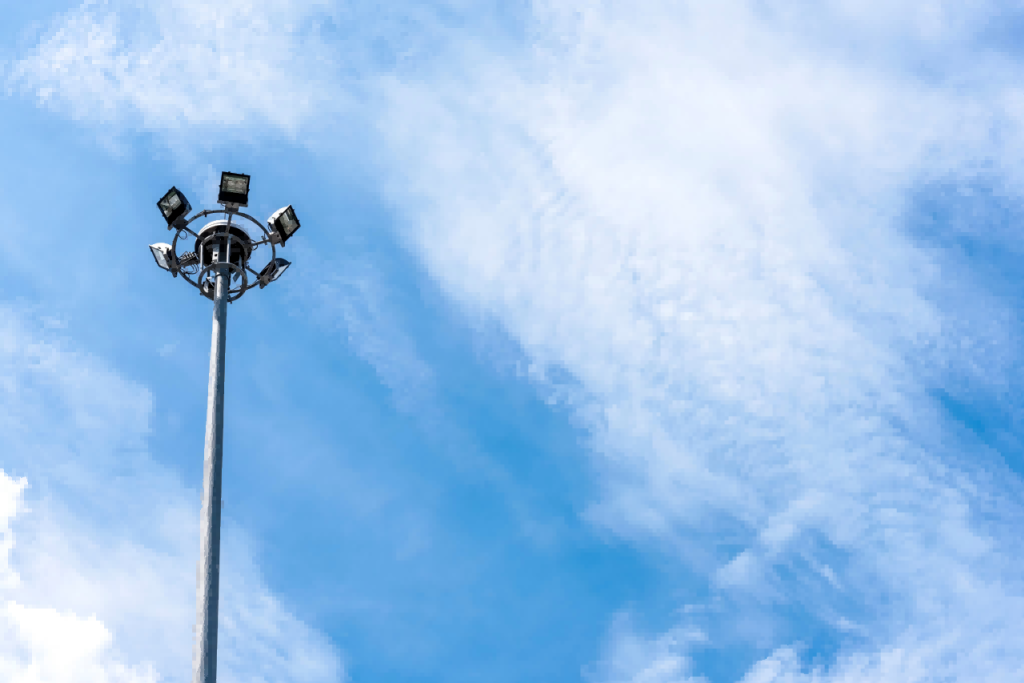
High mast lighting can cause light trespass and glare. These problems happen when lights are close to homes or sensitive places. Glare and sky glow make it hard for drivers to see at night.
- Light trespass is when light goes where it should not.
- Glare makes it hard or unsafe for people nearby.
- Sky glow adds more light pollution in cities.
Special designs can help stop these problems. Manufacturers suggest using shields or custom optics near homes. Good planning keeps light where it is needed and works better.
Ballast & Component Failures
While industrial LED fixtures feature excellent diode lifespans compared to legacy Metal Halide technology, their electronic drivers are highly sensitive. According to IEC 61347 specifications, over 70% of early-stage high mast LED outages stem from driver or Surge Protection Device (SPD) failures caused by thermal overstress or grid voltage transients.
| Component | Average Lifespan | Causes of Failure |
|---|---|---|
| Metal Halide Lamps | 10,000 – 12,000 hours | Vibration, impacts, weather, power surges, faulty ballasts, nature |
| Ballasts | 3-5 years | Thermal stress, electrical degradation, thermal cycling |
Drivers and ballasts often break from heat and electrical problems. In high mast led lighting, drivers break before leds do. Good cooling helps these parts last longer. Fixtures with good cooling need less fixing. Suppliers say to check lights often to find problems early.
Lumen Degradation
Lumen degradation means high mast lights get dimmer over time. Led chips lose brightness because of heat, humidity, and other things. Most led systems lose about 0.25% to 0.3% of their light every thousand hours. This adds up and makes outdoor spaces less bright.
Facility teams should watch how bright the lights are and change them if they get too dim. Picking good products from trusted suppliers keeps lights bright for many years.
High mast lights can have problems like rust, wind damage, and electrical issues. Checking the lights often helps stop these problems before they get worse:
| Maintenance Timing | Recommended Focus |
|---|---|
| Regular checks | shaft, coating, base, arm, luminaire, panels |
| After bad weather | alignment, base, anchors, arm movement |
Picking custom steel poles from a trusted company like Morelux makes the lights last longer, keeps them safe, and saves energy.
FAQ
What is the main cause of high mast light failure?
Most high mast light failures are from electrical problems. Bad ballasts or drivers cause many issues. If teams check the lights often, they can find problems early.
How often should facility managers inspect high mast poles?
Facility managers need to check the poles every 6 to 12 months. Look for Rust,Cracks,Loose bolts.
Can custom steel poles reduce maintenance costs?
| Benefit | Result |
|---|---|
| Stronger design | Fewer repairs needed |
| Quality finish | Longer service life |
Custom poles from a trusted company can save money over time.