
Selecting between direct burial and anchor base light poles relies on site conditions, local building codes, wind load requirements and long-term maintenance plans. Direct burial poles are embedded straight into soil, featuring fast installation and lower overall construction costs. Anchor base poles are fixed to a reinforced concrete foundation via anchor bolts, which greatly simplifies routine maintenance, component replacement and later upgrades.
Key Takeaways
- Direct burial poles deliver fast installation and cost advantages, ideal for rural areas, remote sites and open land with stable soil conditions.
- Anchor base poles require a dedicated concrete foundation. This design supports convenient repair and replacement, making it the preferred option for urban zones and high-traffic areas.
- The final selection should comprehensively evaluate soil composition, project budget, construction timeline and long-term maintenance arrangements, as well as local wind load and building regulations.
What Are Direct Burial Light Poles
Installation Method
Direct burial installation is a streamlined construction method widely adopted per AASHTO and local utility standards. The excavation hole is generally twice the width of the pole base, and embedding depth is determined by pole height and regional wind grade. For conventional short poles, the burial depth is around 3 feet; for tall poles, the depth can reach up to 6 feet. Standard installation steps are as follows:
- Mount all light fixtures and accessories on the pole before hoisting.
- Route electrical cables through the pole interior to the wiring access opening, complying with NEC electrical codes.
- Compact the base and side walls of the excavation hole to ensure ground stability.
- Lower the pole into place and arrange cables properly.
- Add 4 to 6 inches of backfill, adjust vertical alignment with a plumb bob to keep the pole plumb.
- Continue adding backfill and repeatedly check verticality during the process.
- Fully compact all backfill to lock the pole in position.
- Complete cable connection inside the hand hole in accordance with local electrical regulations.
This method cuts construction time and labor costs significantly, perfectly suited for open fields, rural roads and remote areas. Morelux manufactures standardized direct burial steel poles optimized for quick on-site installation.
Materials and Sizes
Common materials for direct burial poles include steel, aluminum and fiberglass. Steel features high structural strength and long service life, fit for large-scale infrastructure projects. Fiberglass and aluminum are corrosion-resistant, performing excellently in humid and coastal environments.
Following conventional utility engineering guidelines, the recommended embedded depth = 10% of total pole height + 2 feet. For example, a pole with 20 feet above-ground height requires a total length of 24 feet, with 4 feet buried underground.
Common Uses
Direct burial light poles are widely applied in multiple scenarios:
- Parking lot lighting
- Rural road and highway auxiliary lighting
- Pedestrian and bicycle path lighting
- Security lighting for commercial parks and industrial zones
- Supporting installation of wireless devices such as 5G antennas
Utility operators prefer this type of pole for remote sites due to its high strength and simple installation. Morelux provides reliable direct burial pole solutions for engineering teams and distributors.
What Are Anchor Base Light Poles
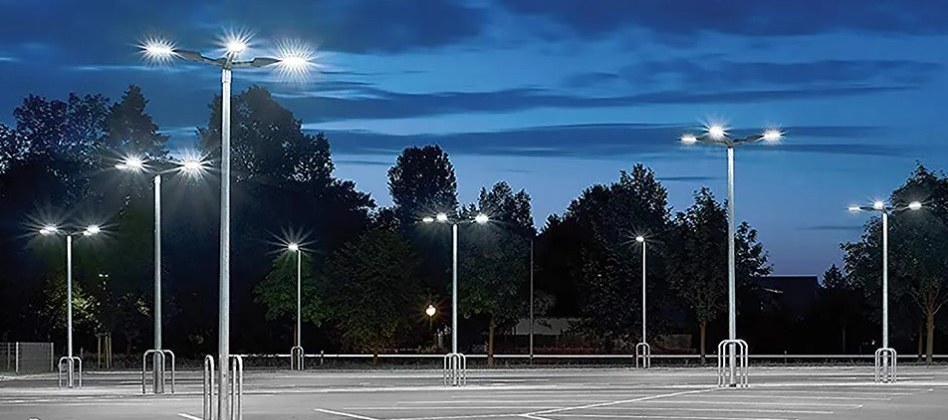
Installation Method
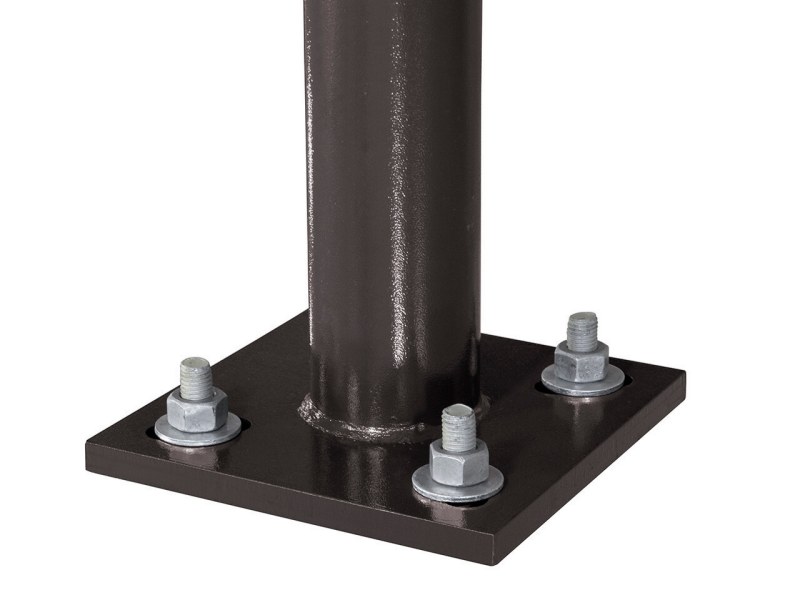
Anchor base light poles rely on reinforced concrete foundations and high-strength anchor bolts to maintain stability. The construction process follows standardized procedures, and road closure permits are mandatory for busy urban areas. The standard installation steps are shown below:
| Step | Description |
|---|---|
| 1 | Excavate the foundation pit according to design drawings |
| 2 | Pour concrete and complete curing (minimum strength: 3,000 PSI / 21 MPa) |
| 3 | Backfill and level the foundation perimeter with qualified materials |
| 4 | Use lifting equipment to place the pole onto the pre-set anchor base |
| 5 | Fasten and torque anchor bolts after the pole is vertically aligned |
| 6 | Apply for official road closure permits for construction in traffic areas |
All concrete foundation work follows ACI 318 (American Concrete Institute) specifications. The monolithic concrete pier must reach 3,000~4,000 PSI compressive strength before tightening anchor bolts. This design enables the foundation to bear bending stress and overturning force caused by extreme weather and strong winds.
Morelux manufactures customized anchor base steel poles tailored for urban projects, supporting bulk orders and non-standard size customization for contractors and distributors.
Materials and Sizes
Anchor base light poles are available in multiple materials, dimensions and shapes, including steel, aluminum, wood, fiberglass and precast concrete. The height ranges from 3 meters to more than 30 meters, with octagonal, polygonal, round and tubular profiles as mainstream styles. Conventional steel pole wall thickness is 3 mm or 4 mm. Most metal poles adopt hot-dip galvanizing treatment for anti-corrosion protection.
| Material | Base Diameter | Shaft Diameter | Thickness |
|---|---|---|---|
| Steel | 4 to 12 inches | Tapered | 11-gauge to 3-gauge |
| Aluminum | 4 to 12 inches | Tapered | N/A |
| Concrete | 4 to 12 inches | Tapered | N/A |
Morelux gives anchor base light poles in many sizes and looks to fit what each project needs.
Common Uses
Anchor base light poles are used in cities and busy places. They help people feel safe at night. These poles make streets and paths look better. Many anchor base poles hold security cameras, sensors, and other devices. City workers use these poles to help drivers and walkers see better and stay safe. Anchor base light poles make roads and sidewalks safer for everyone.
Direct Burial vs Anchor Base: Key Differences
When people compare direct burial and anchor base light poles, they see some big differences. These differences change how the poles are put in, how much they cost, how easy they are to fix, and how long they last. Picking the right pole depends on what the project needs, where it is, and what will happen in the future. The table below shows the main ways these two types of light poles are not the same.
| Feature | Direct Burial | Anchor Base |
|---|---|---|
| Installation Process | Simple: dig hole, insert pole, backfill | Complex: concrete foundation, anchor bolts |
| Installation Time | Fast | Slower (requires concrete curing) |
| Complexity | Low | High |
| Cost | Lower material and labor costs | Higher due to foundation and hardware |
| Maintenance | Harder to replace or repair | Easier to replace or repair |
| Durability | Good in soft soil, less in rocky areas | Excellent in urban and high-wind areas |
| Best Use | Rural, open, or remote sites | Urban, high-traffic, or coastal sites |
Installation Process
Direct burial light poles are easy to put in. Workers dig a hole, put the pole in, and fill the hole with dirt or rocks. This way saves time and money. It is good for jobs that need to be done fast or where big machines cannot go. You do not need a concrete base, so it works well in the country or far away places.
Anchor base light poles are harder to put in. Workers must make a concrete base that meets special rules. After the concrete gets hard, they bolt the pole to the base in a certain way. This takes more time and needs workers who know what they are doing. Anchor base poles are best when the pole must be a certain height or hold heavy lights.
Tip: Morelux gives help for both ways to put in poles. Their team helps people pick the best way based on wind, soil, and project size.
Cost and Time
Direct burial poles cost less at first. The easy way to put them in uses less stuff and less work. Projects can go faster because you do not have to wait for concrete to get hard. This makes direct burial good for big jobs or when you need to finish fast.
Anchor base light poles cost more to put in. You need a concrete base and bolts, so you spend more on stuff and work. It also takes longer because the concrete must get strong before you can put up the pole. But anchor base poles are easier to change or fix later, which can save money over time.
- Direct burial: Quick to put in, costs less, good for jobs that must be done fast.
- Anchor base: Takes longer, costs more, good for jobs that need easy fixing or changes.
Maintenance and Replacement
Direct burial light poles are harder to fix or change. If a pole breaks, workers must dig it out and put in a new one. This can mess up the area and take longer. When you compare direct burial to surface mount, direct burial is not as easy to change later.
Anchor base light poles are easier to fix or change. Workers can unbolt the broken pole and put a new one on the same base. This means less time fixing and less mess. Anchor base poles are used in cities where fast repairs are needed.
Note: Morelux helps project owners and builders with special answers for both types. Their team looks at light weight, wind, and how easy it is to get to the site to pick the best pole.
Durability
Direct burial light poles rely completely on the surrounding earth for lateral stability, achieving their best performance in Class 4 or Class 5 cohesive soils (such as dense clay, compact gravel, or firm soil matrices). Installing a heavy steel direct burial pole directly into loose, fluid sandy soil or coastal areas without a native soil replacement or an engineered concrete backfill envelope is highly discouraged, as sandy soil lacks the necessary shear strength to prevent the pole from leaning under high wind loads.
Anchor base light poles are very strong in cities and windy places. The concrete base and bolts make them steady and tough. Stainless steel bolts do not rust near the ocean. Anchor base poles can be set to the right height, which is important for some jobs. They also work well in rocky dirt, where a shallow concrete base is cheaper than digging deep.
- Direct burial: Best for soft dirt, fast jobs, and places that are hard to get to.
- Anchor base: Best for tall steel poles, places with hurricanes, and jobs that need a neat look.
Some people think using more concrete always makes the pole stronger. But too much concrete can cause problems when the ground freezes. Morelux’s team helps people avoid these mistakes and makes sure each job meets world rules.
Direct Burial vs Anchor Base: Pros and Cons
Direct Burial Light Poles
Direct burial light poles are easy to use for outdoor lighting. Many makers and sellers suggest them because they are quick and cheap. The table below shows the good and bad points:
| Advantages | Disadvantages |
|---|---|
| Cheap because materials cost less | Not good for sandy ground |
| Quick to put in | If a pole breaks, workers must dig out concrete to fix it |
| Easy to install with no base plates showing | Wood poles cannot be taller than 35 feet |
| Looks nice without anchor bolts | Some places do not allow wood poles over 12 feet because of fire risk |
Direct burial poles are great for business lots or country jobs. You do not need a surface mount pole or extra parts. But if you compare direct burial to surface mount, fixing plans can be harder. If a direct burial pole breaks, workers must dig up the old base. This makes replacing poles take longer.
Tip: Direct burial poles are best for soft dirt and places where big machines cannot go.
Anchor Base Light Poles
Anchor base light poles are used a lot in cities and busy places. Many city project leaders pick them because they are easy to fix and upgrade later. The table below shows the main good and bad points:
| Pros | Cons |
|---|---|
| Easy to put up and make straight | Needs careful placement of anchor bolts and pipes |
| Easy to check anchor bolts and grout | Concrete and grout must be watched closely |
| Simple to swap out poles later |
Anchor base poles make replacing old poles fast. Workers can unbolt the broken pole and put a new one on the same base. This does not mess up the foundation. This makes anchor base poles a good choice for surface mount jobs in cities. For projects that need fixing over time, anchor base poles help keep lights working and save time.
Note: Anchor base poles make it easier to plan for upgrades and future fixes.
Choosing the Right Light Pole
Site and Soil Conditions
Makers and sellers need to check the soil before picking light poles. Sandy soil is weak and can move or sink over time. Clay soil holds water and can get bigger, which may make the pole less steady. Rocky soil is hard to dig and might need special ways to put in the pole. Direct burial works best when the ground is firm and does not change much. Anchor base is better in cities or when the pole is tall or faces strong wind.
- Things to know about soil:
- Sandy soil: can wash away or sink
- Clay soil: keeps water, can get bigger
- Rocky soil: hard to dig
Budget and Timeline
People in charge of projects think about money and time when picking a pole type. Direct burial costs less at first and goes in faster. Anchor base needs more money at the start because of the concrete base, but it is easier to fix or change later. It is important to think about both the first cost and how much it will cost to keep the poles working.
- Direct burial: cheaper at first, quick to put in
- Anchor base: costs more at first, easier to fix later
Maintenance Needs
How easy it is to fix the pole matters too. Direct burial poles are harder to swap out, especially if the ground changes. Anchor base poles are easy to take down and put back up. Sellers say you should think about fixing the poles and how strong the wind is to make sure the poles last a long time.
Application Examples
The table shows how anchor base poles help in city jobs:
| Case Study | Description | Advantages |
|---|---|---|
| Urban Historic District Lighting Upgrade | The city changed street lights but kept old-style iron poles. | Used less energy, made streets brighter, saved money on repairs, and made the area look nice. |
| Park Lighting with Vintage Aesthetic | Workers put LED lights in a park using old-style poles. | Kept the park safe and pretty, stopped light from bothering people or animals, and helped protect nature. |
Makers and sellers can ask Morelux for special help. Morelux’s team looks at the ground, wind, and pole height to give the best advice for each job.
Picking between direct burial and anchor base light poles depends on what your project needs. The table below shows how they are different and what to think about:
| Feature | Direct Burial | Anchor Base |
|---|---|---|
| Installation | Easy to put in | Harder to put in |
| Cost | Costs less | Costs more |
| Replacement | Hard to swap out | Easy to swap out |
| Site Suitability | Good for soft dirt, country areas | Good for cities, hard dirt |
If you want the best choice, you can ask experts for help. Manufacturers and sellers can give advice that fits your project.
FAQ
What are the main differences between buried and anchored light poles?
Buried light poles are inserted directly into the ground. Anchored light poles are bolted to a concrete base. Both types are used by manufacturers in lighting projects.
Can Morelux customize steel light poles to meet specific project requirements?
Morelux can produce steel light poles in special sizes. Their factory can meet the needs of large-volume orders and special projects.
| Service | Availability |
|---|---|
| Custom Sizes | Yes |
| Custom Finish | Yes |
| Engineering | Yes |
Which pole type is easier to replace or maintain?
- Anchor base poles are simple to swap out.
- Direct burial poles need digging to take out.
- Sellers say anchor base poles are better if you need to fix them often.