Choosing the right light pole helps ensure safety and beautify the environment. Cities typically use steel or aluminum light poles because they are durable. Parks prefer decorative aluminum light poles. Fiberglass light poles are less prone to swaying, making them ideal for surveillance cameras. Different light poles are suitable for different needs.
Key Takeaways
- Choose the best light pole material based on your needs. Steel is strong, durable, and affordable. Aluminum is lightweight and rust-resistant. Fiberglass is durable and non-conductive.
- Proper maintenance of the light pole helps extend its lifespan. It is recommended to inspect aluminum light poles every three to six months. Clean the light pole with mild soapy water to maintain its appearance.
- Consider whether the shape of the light pole is suitable for wind resistance. Conical light poles work best in windy areas, especially suitable for highways and airports.
Types of Light Poles and Materials
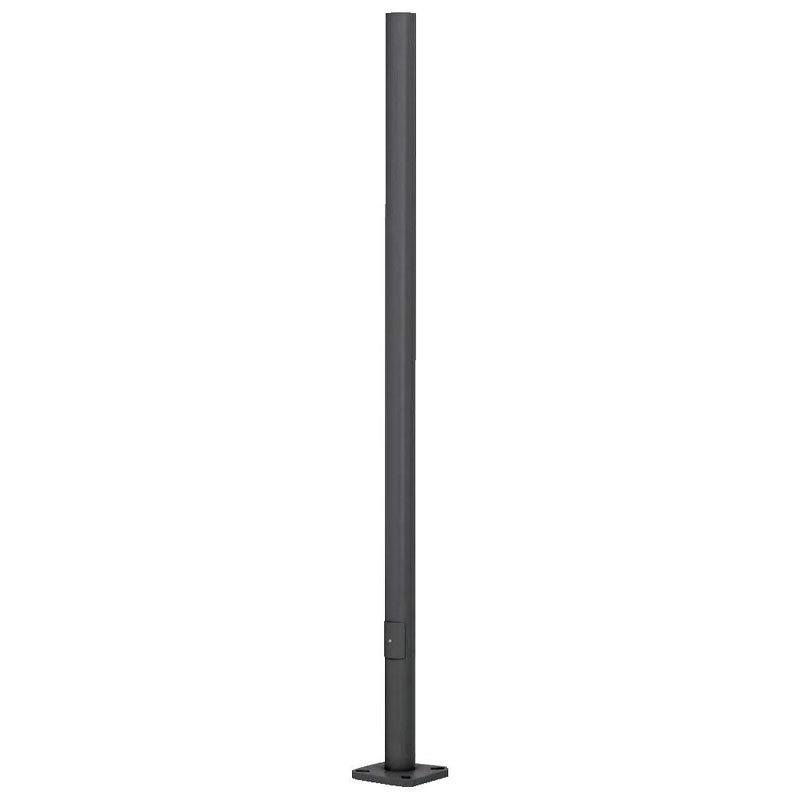
Light poles come in various shapes and materials. Each material is suitable for specific locations and uses. Companies and factories can customize light poles for different projects. The table below lists the main types, materials, key features, and lifespan of light poles.
| Type | Material Composition | Key Properties | Lifespan |
|---|---|---|---|
| Aluminum | Aluminum | Lightweight, corrosion-resistant, aesthetically appealing | 50+ years |
| Fiberglass | Fiberglass | Non-conductive, corrosion-resistant, lightweight | 60-70 years |
| Steel | Steel | Strong, cost-effective, susceptible to rust | 20-30 years |
| Concrete | Concrete | Extremely durable, heavy | 50+ years |
Steel Poles
Steel poles are widely used in cities and factories. They are very strong and can support weights ranging from 60 to 400 pounds (approximately 27 to 181 kg), including light fixtures and other components. Steel poles are not expensive, ranging in price from $300 to $2,000 depending on size and shape.
Steel poles require special coatings to prevent rust and damage. Some common coatings include powder coating, galvanizing, anodizing, nano-coating, UV-resistant coating, and anti-graffiti coating. These coatings help extend the lifespan of steel poles by 20 to 30 years. Due to their weight, steel poles require mechanical equipment for installation.
Tip: Steel poles work best where strong support is needed, like highways and factories.
Aluminum Poles
Aluminum poles are lightweight and rust-resistant, making them easier to handle and install than steel poles. Priced between $400 and $4,000, aluminum poles are more expensive than steel poles but have lower maintenance costs and a lifespan of over 50 years. Aluminum forms a natural protective layer on its surface, making it ideal for damp or saline environments.
Many companies recommend aluminum poles for parks and aesthetically pleasing locations. Inspecting the poles every three to six months helps extend their lifespan. Cleaning with mild soapy water keeps them clean. Unpacking as soon as possible after receiving the poles prevents water damage.
| Material | Typical Lifespan |
|---|---|
| Steel | 20 to 30 years |
| Aluminum | Over 50 years |
| Fiberglass | 60 to 70 years |
Fiberglass and Composite Power Pole
Fiberglass and composite power poles are lightweight, non-conductive, and rust-resistant. These poles have a lifespan of 60 to 70 years. Because fiberglass poles are non-conductive, they are ideal for areas prone to lightning strikes. They can withstand wind speeds up to 180 mph and will not break even in strong storms.
Fiberglass power poles require virtually no maintenance and no chemicals. They maintain good performance even in sunlight, especially when coated with a UV-protective coating. This allows their color and strength to remain unchanged over time. Many companies recommend using fiberglass power poles in locations such as security cameras, beaches, and saline-alkali land.
- Long-lasting
- Light and simple to put up
- Good for the environment
- Very strong and tough
Callout: Composite poles stayed standing during big storms in Florida and Texas, showing they are very tough.
Each kind of lighting pole has its own job. Steel poles are strong for heavy things. Aluminum poles are easy to put up and do not rust. Fiberglass poles are safe and last long in tough places. Picking the right pole depends on where and how you use it, and your budget.
Shapes and Design Options for Lighting Poles
Conical and Tapered Pole
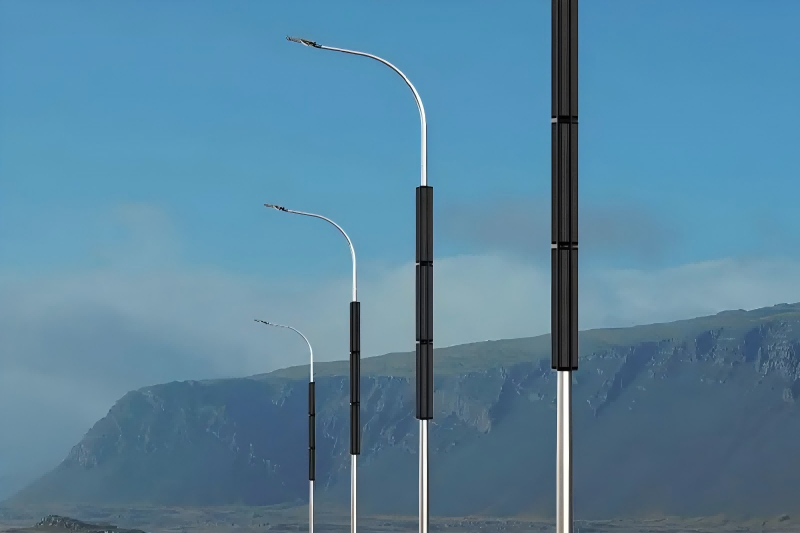
Conical and tapered square poles are widely used. Companies like Morelux recommend using conical poles in areas with strong winds. Tapered poles help wind bypass the pole, making them ideal for highways, airports, and sports fields. Tapered square poles also offer better wind resistance than rectangular poles. The table below shows the wind performance of various pole shapes:
| Pole Shape | Wind Resistance Performance |
|---|---|
| Tapered Square | Better than standard square poles |
| Round Conical | Considered the best option overall for wind resistance |
| Straight | Higher wind resistance due to increased surface area |
You can see round conical and tapered square poles in many places. They are used on city streets, parking lots, and at factories. Their smooth shape also makes lighting look nice.
Square and Hexagonal Light Posts
Square and hexagonal light posts are suitable for commercial and public spaces. Square posts have flat sides, making them easy to install and replace. Hexagonal posts are very sturdy, and their six faces help distribute pressure, maintaining stability even in strong winds. Octagonal posts are equally robust and have a stylish appearance. Both hexagonal and octagonal light posts illuminate spaces in unique ways, making venues more beautiful at night.
| Feature | Description |
|---|---|
| Structural Advantage | Square poles have flat sides, so they do not block wind as well as round poles. |
| Stability | Hexagonal and octagonal poles spread weight out for more stability. |
| Aesthetics | Hexagonal and octagonal poles look modern and welcoming. |
Special Design Poles (e.g., decorative, high-mast)
Decorative poles and high-mast poles are made for special uses. Decorative poles make parks, plazas, and walkways look nice. High-mast poles give bright light to stadiums and highways. Engineers plan these poles so they can add new things later, like smart tech or holiday lights. This helps cities save money because they do not need to buy new poles. Special design poles make places safer, brighter, and help people feel proud of their community.
Applications and Selection Factors of Light Poles
Street and Road Lighting
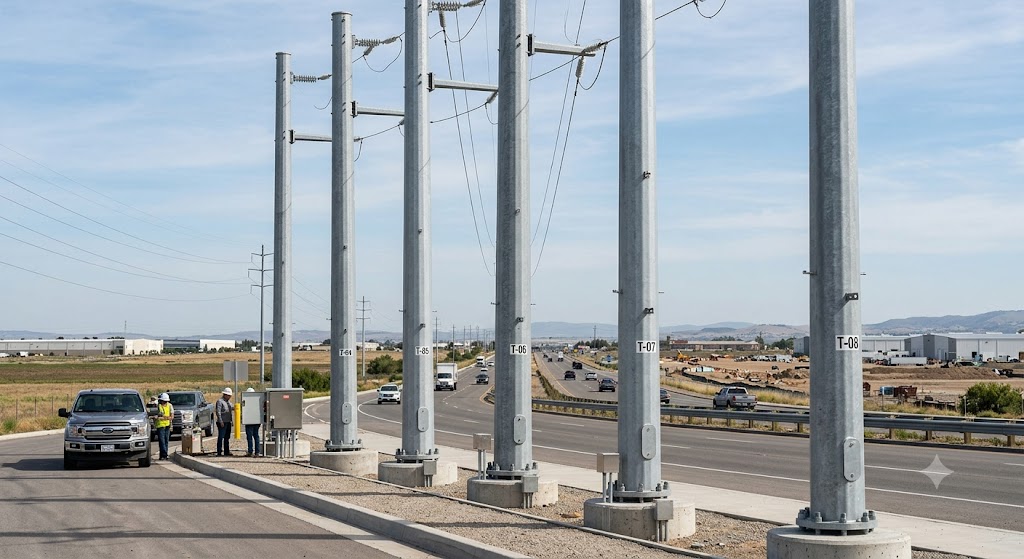
Towns use light poles to support streetlights. These lights help ensure road safety for everyone. The type of light pole depends on the width of the road, traffic volume, and location. High poles are used for wide roads. Shorter poles are suitable for sidewalks and bike lanes. Most cities choose steel or aluminum poles because they are durable and do not rust. Q235 steel poles are popular and can reach heights of 6 to 12 meters. The spacing between poles should be 2.5 to 3 times their height. This helps to distribute light evenly and prevent dark spots. Lighter poles can be placed directly in the ground. Anchor bases are better suited for windy areas. Hinged base pole designs allow workers to repair lights more easily and safely. LED lights save energy and reduce light pollution. Concrete foundations help keep each pole stable and upright.
Floodlighting and Stadiums
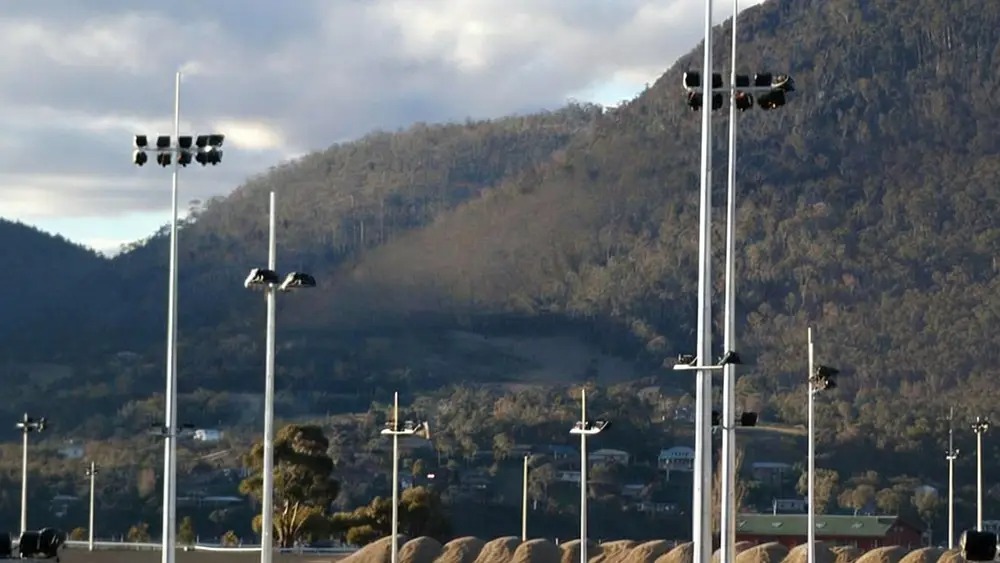
Floodlight poles are essential in stadiums and large parking lots. These poles hold floodlights at heights of 20 to 100 feet. High-mast floodlight poles are made of steel or fiberglass. They can withstand strong winds and intense light. Smaller floodlight poles can be placed underground. Tall or heavy poles require anchored bases for safety. Base-hinged poles and poles with lifting options make securing or replacing lights easy. The lifting section allows workers to lower the lights for maintenance, making repairs safer. Floodlight poles must not rust, especially outdoors. Companies like Morelux manufacture specialized floodlight poles, offering both lifting and direct-buried options to meet different needs.
| Application Type | Height Range (feet) | Description |
|---|---|---|
| Commercial Parking Lots | 20-30 | Easy to install and maintain |
| Sports Complexes | 30-50 | Support floodlights for wide coverage |
| Ports and Industrial Yards | 50-100 | High mast floodlight poles for large areas |
Decorative Lighting and Landscape Lighting
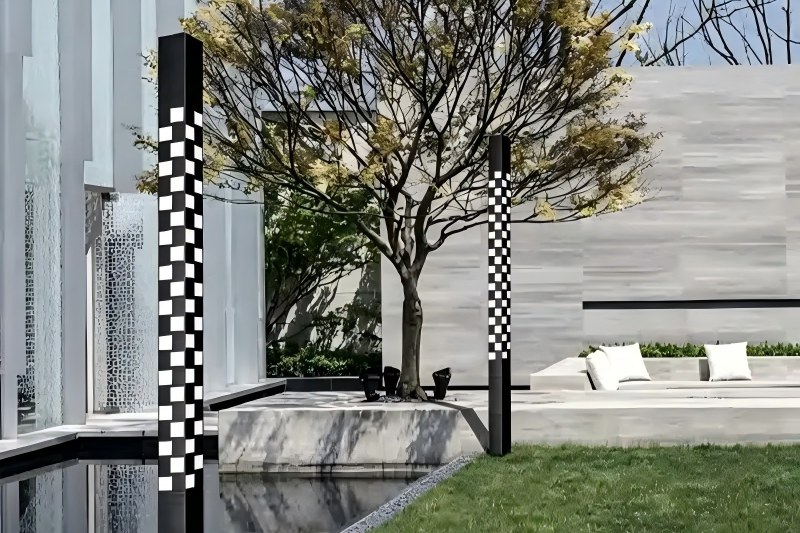
Decorative light poles beautify parks, gardens, and plazas. These poles come in a variety of styles, from classic to modern. Made of aluminum or fiberglass, they are durable and rust-resistant. Direct-buried designs allow for easy installation in soft soil. Pole with hinged bases and those with lifting mechanisms facilitate securing and upgrading. Decorative light poles illuminate dimly lit areas and improve safety. Many parks use LED and solar lights for energy efficiency. Unique designs can become a major highlight of a park or garden. Rust-resistant materials ensure the poles always maintain their aesthetic appeal.
- Decorative poles make public spaces look better and safer.
- Direct burial and base-hinged pole designs are easy to use and fix.
- Light pole with lifting and lifting mechanism options help with repairs and upgrades.
- Fiberglass is non-conductive, so it is safer in parks and near water.
Note: The right lighting pole can hold floodlights, traffic signals, and street lights. This makes each place safer and nicer to visit.
Selection Factors for Light Poles
When picking lighting poles, many things are important:
- Type and width of the road
- LED fixture details
- How far apart the poles are
- What is around the area and any obstacles
- Weather and location conditions
- How strong and tough the material is
- Pole height and where it goes
- How it is put in, like direct burial or anchor base
Direct burial is easy for many jobs. Base-hinged pole and light pole with lifting options give more choices. Companies like Morelux help people pick the best lighting pole for each job. This makes sure the poles work well and keep people safe for a long time.
Steel, aluminum, and fiberglass lighting poles have many shapes. Each shape fits different lighting needs. Picking the right pole depends on where you use it. It also depends on what you need and how much money you have. Experts say you should do a few things:
- Look at the site and check the soil.
- Find out what the local rules are.
- Talk to manufacturers or specialists.
FAQ
What are the most commonly used materials for lighting poles?
Manufacturers typically use steel, aluminum, and fiberglass to manufacture lighting poles. Each material has its unique advantages. These materials are suitable for different locations and different uses.
How does the shape of a lighting pole affect its performance?
Lighting poles come in round, square, and hexagonal shapes. These shapes help the poles withstand strong winds. A suitable shape also helps maintain the stability and safety of the lighting fixtures.
Can lighting poles support smart lighting systems?
Lighting poles can be used with smart lighting systems. Many companies produce poles that can be equipped with sensors, cameras, and smart controllers. These features are applied to new lighting projects.
How do lighting poles cope with harsh weather?
Lighting poles are designed to withstand harsh weather. They use robust materials and special coatings. Companies test the poles for wind, rain, and sun exposure to ensure their performance.
Why do cities choose steel lighting poles?
Cities choose steel lighting poles because they are strong and durable. Steel light poles can withstand the weight of heavy lighting fixtures and remain standing for many years.
Can light poles be customized for different projects?
Light pole manufacturers can customize light poles for different projects. Customers can choose the required height, shape, and surface finish. This helps the light pole perfectly match any project.
What maintenance do light poles require?
Light poles require regular inspection and cleaning. The company recommends that you inspect the fixtures and coatings. This helps keep the lighting system in good working order.
How do light poles improve public safety?
Light poles provide bright and uniform lighting for streets and parks. Good lighting helps people see better and prevents accidents.
Can light poles be used for solar lighting?
Light poles can be used with solar lighting systems. The company’s light poles can be fitted with solar panels and fixtures. This helps save energy.
What is the lifespan of a typical light pole?
Light poles can last from 20 to 70 years. The lifespan of a light pole depends on the material, installation location, and maintenance.
Who can help you choose the right light pole?
Lighting companies like Morelux can help you select the best light pole. They will provide advice on materials, shape, and installation methods for each project.